
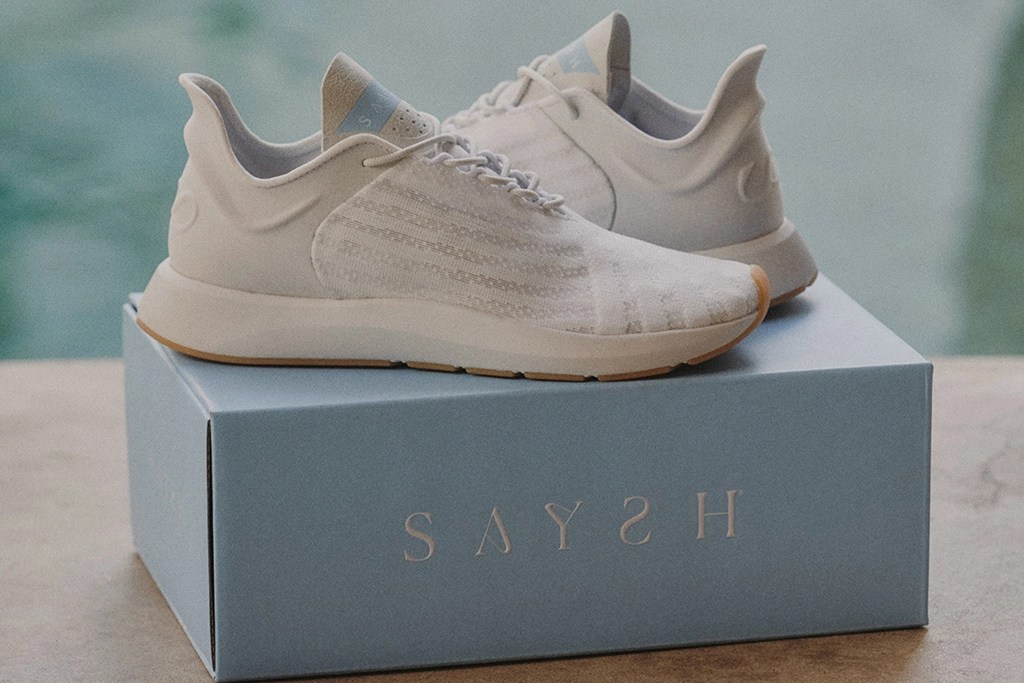
Public Relations Campaign for Saysh
By Kate Walkup
Situation Analysis
Client Overview: Saysh is a brand-new shoe company owned by six-time Olympic gold medalist Allyson Felix. The company was launched by Felix and her team in 2021, and its goal is to provide female athletes with a shoe that they can personally connect with, as they will be intimately acquainted with where it came from and how it was made. Felix left Nike and joined Athleta after Nike said they could not guarantee she would keep her sponsorship after having a baby. The only problem with Athleta was that they did not make shoes, so Felix decided to take matters into her own hands. Coming into the 2021 Olympics, Felix did not have a sponsor for her racing spikes. She and her brother, Wes Felix, founded Saysh and launched their company with racing spikes. Felix competed for the first time in her shoes at the U.S. Track and Field Olympic Trials. Saysh’s mission is to design and develop products for women, designed by women (Saysh, 2021). The brand represents hope, acceptance, and power to create change. Since Felix has been widely known through her athletic success ever since her collegiate years at USC, a possible audience that Saysh may begin to target could be collegiate athletes who are in the same shoes that Felix once was in—but this time they could be literal shoes instead of figurative ones.
External Environment: Something that is outside of Saysh’s control, which could help or hinder the company’s success, is the already-competitive shoe industry that they are entering into. Joining the movement of standing up for female athletes and encouraging them to reach their goals works as a strength for Saysh because the company puts such a strong emphasis on making the shoe specifically for the female athlete. However, entering the shoe market has been one of the hardest challenges for Saysh because of the already established competition in the industry. Many people are loyal to the brands they have been wearing for years, which means it can be hard for individuals to switch over to a brand-new shoe that not many people have tested.
The industry of Saysh revolves around the idea of the purpose for making the shoes instead of simply creating a shoe to make a profit. Felix emphasizes the importance of a shoe that is made for women by women. This moto that Saysh operates under differs from the rest of the athletic shoe industry because Saysh is the first athletic shoe brand that is specifically designed and created by women.
An external factor that currently affects Saysh in a positive way is how other shoe brands have already positioned themselves and have lasting reputations, while Saysh has the ability to develop its own position in the shoe industry. However, since the goal Felix has for her brand is different from her competitors, Saysh is not as proven as a company like Nike or Asics, simply because it is unknown, which could result in a weaker stance that does not set the brand apart from other companies in the industry. People who are looking for a running shoe are naturally going to look at brands that have been around for a while and have a positive reputation. Saysh does not have a bad reputation; it simply does not yet have a reputation because it is such a new brand.
The increased attention of social issues could affect the company in a positive way. Since more and more female athletes are speaking up about gender equality in sports, Saysh is entering the shoe business at one of the best possible times. Because Saysh advocates for athletes who also want to be mothers and puts some of its proceeds toward raising money to support mothers who are athletes, the brand is almost creating its own advocacy group. This makes Saysh more inclusive not only for the athletes it is working with, but also for the general female athlete looking to find support and acceptance in her dual positions as both athlete and mother.
Something that Saysh may be affected by in a negative way could be the need to raise the prices of the products as a way of being able to get a foot in the door since the industry is already competitive. Saysh’s racing spikes are being sold for $150, which is at the higher end of the price range when looking at competing brands. For example, Nike’s spikes range from $65-180. While the steep prices are necessary for the company to stay afloat, the combination of being unproven and being at the steeper end of pricing in the shoe industry could be harmful to the brand’s success.
SWOT Analysis: Some of Saysh’s strengths as a company include its unique mission to provide shoes that are made specifically by women for women. Having Felix—a six-time Olympic gold medalist—as the founder of the company gives Saysh a valuable internal resource because of her testimonial, recognition, and likability in the athletic community. Another Saysh’s strengths is its partnership with Athleta. The company has already partnered with the athletic wear brand that Felix is sponsored by and sells Saysh shoes in their stores and on their website. Since Felix is sponsored by Athleta, potential customers will see that connection and thus have a higher chance of purchasing the brand.
Some weaknesses of the company could be the inability to compete with other brands that have a larger following, the steep prices of the products, and the narrow audience they are reaching by primarily selling running-specific products.
One opportunity that the company could take advantage of would be partnering with various organizations that promote women and girls to participate in sports such as Play It Forward Sport and The Women’s Sports Foundation. Taking Saysh products to high school track meets or visiting track programs for younger girls could be another way for the company to promote their product on a more personal level.
A threat to Saysh is the competitiveness of the industry it is entering into. So many shoe brands already have a large following, and people are loyal to the companies and products they know best. While Felix’s brand has a unique and positive mission and purpose, it is young and unknown to most potential customers.
Opportunity Statement: Saysh could benefit from a public relations campaign because of the company’s ability to draw in a specific demographic—female collegiate athletes—which will set Saysh apart from other competing brands that already have their own followings.
Target Audience: The target audience that I have chosen to communicate with is female collegiate runners. Reaching out to this group would help me address the problem of Saysh not being able to keep pace with competitors because collegiate runners are at an age where they have been influenced by other brands for the majority of their lives, but their main goal in finding a shoe is to wear something that makes them compete at their highest potential. This demographic is also only a few years away from potentially having kids of their own and having to juggle being a mother while continuing their sport. I think that collegiate women would have impactful input about the mission of Saysh and how they think it stands apart from competing brands. Some opinion leaders for this target audience could be older female runners or coaches who experienced sports before or during Title IX and have seen a change in the running and athletic community.
Campaign Plan
Goal: The goal for this public relations campaign is to convince collegiate female runners to switch from their current shoe brand to Saysh. I have chosen this goal because the company is new, and many collegiate runners are likely to recognize and look up to Allyson Felix. This campaign would begin in January of 2022.
Objective One: My first objective is to create awareness and interest in Saysh by increasing the number of collegiate female track and field athletes who are aware of the brand by 25% by the end of the 2022 track and field season. This percentage was chosen because the brand is less than a year old and the number of followers will continue to increase fairly consistently over the next few months. More specifically, the number of female collegiate athletes communicating about the brand on social media in some way would allow Saysh to track the number of mentions fairly consistently.
This first objective is based on the Diffusion of Innovations Theory. This theory describes the process by which people make decisions. The Diffusion of Innovations Theory consists of a five-step process that occurs before the individual even adopts the idea of the behavior at hand. The five steps occur in the following order: awareness, interest, evaluation, trial, and adoption (Page & Parnell, 2021). By using this theory in accordance with my plan, the athletes will have to first become aware of the company before they go on to act in a way that relates to the rest of the steps of the theory, which would finally lead them to the adoption stage.
Strategy A: My first strategy for objective one is for Saysh to recruit post-collegiate athletes to sign professional contracts with the company. This would help Saysh by creating a group of athletes who can then help promote the product to their followers on social media. This will parallel the five-step process of the Diffusion of Innovations Theory by creating awareness through the followers of the athletes who sign with Saysh, and the goal of the strategy is to hopefully follow the five steps, ending with the athletes’ followers adopting the shoes.
Tactic One: The first tactic to back up strategy A is to hold events with a group of NIL collegiate athletes at the Saysh headquarters as a way of building a cohort of top-tier athletes in each class. In 2022, we would start with the class of 2023 and create the first group of NIL athletes from just that class. The idea would be to eventually start with a new group of freshmen every year as a way of bringing the female athletes into the Saysh family at the start of their collegiate career.
Tactic Two: The second tactic for strategy A is to bring a variety of Saysh shoes to these athletes’ practices for their teammates to try out. In addition to introducing the athletes to the shoes, having Felix present at the practices for athletes to talk to and hear her story would also create a sense of community throughout the brand. This could encourage the athletes who are not being provided with Saysh shoes to be more inclined to purchase them on their own.
Strategy B: My second strategy for creating awareness and recognition for Saysh is to cultivate these collegiate athletes as opinion leaders by giving them Saysh shoes to try and wear. Since the selected group of NIL athletes already have the product, they will be in a position to encourage their followers on social media to reach the fifth and final stage—adopting—of the Diffusion of Innovations Theory. By doing this, the company would be able to target athletes who both agree with the message behind the brand and enjoy the way the Saysh shoes feel while they compete and train for their sport.
Tactic Three: For my third tactic, each student-athlete who is a part of the NIL Saysh group will be required to curate a mandatory minimum number of posts each week. By doing this, the athletes will be earning what they are receiving from the company as well as putting the brand out on social media for their followers to see and get an inside look at what the company has to offer. These posts could include personal testimonials about how the products have changed their approach to the sport, unboxings of new products, or even videos and pictures of the athletes using the products.
Tactic Four: The fourth tactic is for Saysh to reach out to the top 10 NCAA track and field athletes across events in the Pac-12 and ask them to be the first athletes to receive benefits from the company. Felix’s attendance to USC and the West Coast location of the company inspired the initial exclusion to the Pac-12 conference. By having the top 10 athletes be the first group of NIL ambassadors for Saysh, the company would be starting with a select group of female collegiate athletes that will hopefully grow in the years to come.
Objective Two: My second objective for the public relations plan is to have 10% of female collegiate track and field athletes try, evaluate, and adopt the product by the end of the 2022 season. Having athletes try out the brand is important because it will provide a personal bond between the athlete and Saysh, which will hopefully make the athlete want to support the brand and share it with others in the future.
The second theory that I will be using throughout this public relations campaign is the Uses and Gratifications Theory. This theory states that people use many different forms of mass media, so public relations professionals see what forms of mass media these individuals tend to gravitate toward in an effort to find the best form of media to reach the intended audience (Page & Parnell, 2021). This relates to my campaign because knowing which media platforms female collegiate athletes are drawn to will be beneficial in figuring out how to reach the most of the target audience at once.
The third and final theory that I have chosen to use for the campaign is the Social Exchange Theory. This theory talks about individuals making cost/benefit analysis of their actions before they act, resulting in how they behave (Page & Parnell, 2021). While everyone wants to keep their costs low, this can be difficult when buying expensive shoes. However, through the events that Saysh will put on based on my public relations plan, it will draw people in to make them want to support the company based on the story behind the shoes instead of the price tag attached to them.
Strategy C: My third strategy that relates to the in-person interactional side of the public relations campaign consists of Saysh being present at some collegiate track and field practices throughout the 2022 season. While Felix would not have to attend all of the practices, some of the members of her team could attend along with the student-athlete ambassadors for the brand. This way, student-athletes who are not currently trying out the products could have the opportunity to hear the story of the brand from the Saysh team as well as have the opportunity to purchase their products.
Tactic Five: The first tactic for my third strategy is to have the various university track and field social media accounts advertise that Saysh will be attending the practices. By doing this, the student-athletes who are following their own teams’ social media accounts will likely be notified that Saysh will be attending their practice; that way, they will be prepared to talk to the company owners and possibly look into purchasing a pair of Saysh shoes.
Tactic Six: My next tactic for this strategy is to have Felix attend some of the practices (maybe just one or two during the first season) and give a speech about the company and how she started it. By using this form of one-on-one communication, these athletes who have looked up to her for years will have the opportunity to talk to her in person and hopefully be persuaded to try out the products.
Strategy D: My final strategy for Saysh’s public relations campaign is to hold informational sessions for athletes and coaches that would occur during track and field meets throughout the season. By doing this, Saysh would have the opportunity to reach a wide group of people in a short amount of time and get their story across in a meaningful way.
Tactic Seven: A tactic for this strategy would be to create social media posts and reminders so coaches and athletes know to stay afterward for one of the Saysh informational sessions after one of the competitions. These social media posts could be advertised on the Saysh social media accounts, the universities’ social media accounts, and the student-athlete ambassadors’ social media accounts leading up to the event.
Tactic Eight: My final tactic for Saysh’s public relations campaign is to have bins of shoes for athletes to test out and purchase at the informational sessions. This way, the athletes’ relatives can also be involved and possibly be more inclined to purchase a pair of shoes for their athlete after seeing them compete in the meet. The company could also have a table of leave behinds for individuals to pick up that lead people to the website—possibly with a coupon code. This form of events could also lead to loyal customers who continue to purchase products from Saysh in the future.
Evaluation: In evaluating the effectiveness of the NIL group in tactic one, I would be able to measure how many of the athlete ambassadors’ followers have reacted to the Saysh-specific content. This would help us decide if we met the first objective based on the level of interest and awareness from the target audience. In tactic two, we would be able to observe how many athletes show interest in the products at the events and enjoy running in the shoes. This would also help with deciding whether or not we met the first objective based on the interest athletes show during the practices. The third tactic will help Saysh create a larger overall presence on social media based on how many posts NIL athletes create, which will also help Saysh reach more of their target demographic by using mass media. My fourth tactic will help reach my first objective because creating the group of Pac-12 athletes to promote the products will help Saysh build connections with the athletes, which will eventually bring them closer to their goal of convincing athletes to switch to Saysh shoes and recruit post-collegiate athletes to sign with the company.
My fifth tactic supports my second objective by making the target audience aware of the events that Saysh is holding on college campuses. This will help female collegiate athletes be aware of the events happening at their practices. The sixth tactic will incorporate one-on-one communication between Felix and the athletes as a way of making the target audience more inclined to try the products. For tactic seven, posting about Saysh popup sales would help individuals be prepared to try the product. This would also draw in the group of potential loyal customers who Saysh could build a bond with. My eighth and final tactic will give the target demographic the opportunity to try, evaluate, adopt, and possibly even switch over to wearing Saysh shoes full-time. This would help the company reach both their second objective and achieve the overarching goal of the public relations campaign.
References:
Chavez, Chris, host. “Why Wes Felix and Allyson Felix Started SAYSH As A Lifestyle, Footwear Company Built for Women.” Citius Mag Podcast, 12 July, 2021. https://podcasts.apple.com/us/podcast/why-wes-felix-and-allyson-felix-started-saysh-as/id1204506559?i=1000528665671
Deng, V. (2021). Allyson Felix Just Launched her Own Shoe Company, Complex,
https://www.complex.com/sneakers/allyson-felix-saysh-shoe-company
Felix, A. [allysonfelix]. (n.d.) Posts [Instagram page]. Retrieved October 17, 2021, from
https://www.instagram.com/allysonfelix/
Felix, A. [bysaysh]. (2021). Posts [Instagram page]. Retrieved October 17, 2021, from
https://www.instagram.com/bysaysh/
Felix, A. (2021). Saysh, https://saysh.com
Fenton, C. & Walkup, K. (2021). Allyson Felix makes fifth Olympic Team, first since becoming
a mother, TrackTown USA, https://www.gotracktownusa.com/news/2021/6/21/allyson-felix-makes-fifth-olympic-team-first-since-becoming-a-mother
Gregory, S. (2021). Exclusive: Allyson Felix Launches Her Own Shoe Company Two Years After Breaking Up With Nike, Time, https://time.com/6073949/allyson-felix-launching-saysh- shoes/
Page, J. & Parnell, L. (2021). Introduction to Public Relations. Sage.
In JAMS 347: Principles of Public Relations, I created a full PR plan for the shoe company Saysh. Through a SWOT analysis, I was able to come up with a plan for the company to advertise their products and reach a wider audience.
 Kate Walkup